English
 Español
Home Styling · Guide
Is Your Straightener Actually Safe on Damp Hair?
The honest answer sits in the fine print — wattage, vents, and three words on the box. Everything else is guesswork that your hair pays for.
The Direct Answer: Check the Wattage, Steam Vents, and Manufacturer Wording First
The hair straightener is safe to use on damp or slightly wet hair only if the manufacturer explicitly labels it as a "wet-to-dry" tool. In practice, that means checking three things before you ever place damp strands between the plates: the listed wattage (most safe wet-to-dry irons run between 60W and 90W to vaporize moisture without scorching hair), the presence of visible steam vents along the plate edges, and the exact wording in the product manual or packaging. If none of these are present, the tool is designed for dry hair only, and using it on wet hair risks both hair damage and a hissing, spitting steam reaction that can burn skin.
Many people assume that any straightener with a high maximum temperature setting must be powerful enough to handle a little extra moisture, but temperature range and moisture tolerance are two completely separate engineering considerations, and conflating them is one of the most common mistakes made in home styling routines. The rest of this article walks through how to verify these features, what happens physically when heat meets water in your hair shaft, and how to build a styling routine that keeps your hair healthy regardless of which type of tool you own.
Why Water and Heated Plates Don't Normally Mix
Hair is made mostly of keratin protein, and each strand contains bound water inside its cortex even when it looks dry. When a heated plate touches hair that still has surface moisture, that water doesn't just evaporate quietly — it boils. At typical styling temperatures of 300°F to 450°F (roughly 150°C to 230°C), water turns to steam almost instantly, and the pressure of that steam can force its way outward through the hair's cuticle layer.
Repeated steam eruptions from the hair shaft physically lift and crack the cuticle scales — the audible sizzle isn't a normal part of styling, it's the sound of damage happening.
It helps to think of the hair shaft as a bundle of tiny, overlapping shingles, which is essentially what the cuticle layer is. When those shingles are dry, a heated plate can glide over them smoothly, sealing them flat as it passes. When water is trapped underneath, the sudden phase change from liquid to gas pushes those shingles outward from the inside, sometimes forcefully enough to chip or tear individual scales. Steam-related damage is often localized and jagged, which is part of why hair that has been repeatedly straightened while damp can develop patchy rough spots rather than uniform dryness.
hair straightener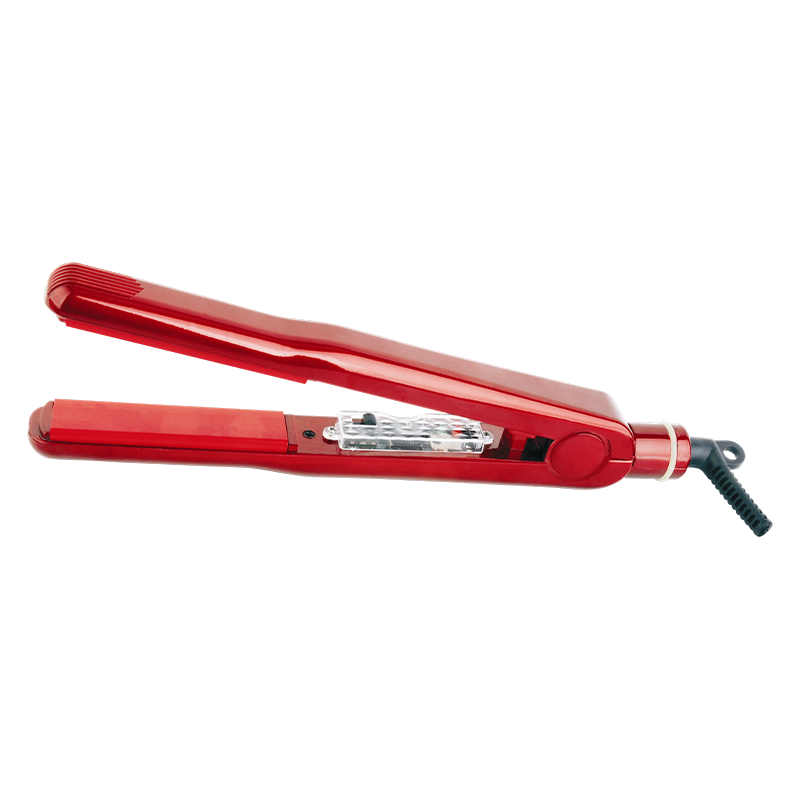
Five Signs a Straightener Is Actually Built for Damp Hair
Not every straightener that looks similar on a shelf performs the same way once it meets moisture. Manufacturers that design specifically for wet-to-dry use build in several features that a standard dry-hair tool lacks.
- Explicit "wet-to-dry" or "wet and dry" labeling on the box, manual, or product page
- Small steam-release vents or perforations along the edges of the plates
- A slower, moisture-adjusted heat-up curve rather than an instant jump to maximum temperature
- A recommended maximum moisture level, often described as "towel-dried" or "80% dry," rather than dripping wet
- Higher-than-average wattage, since vaporizing water requires more energy than styling dry hair
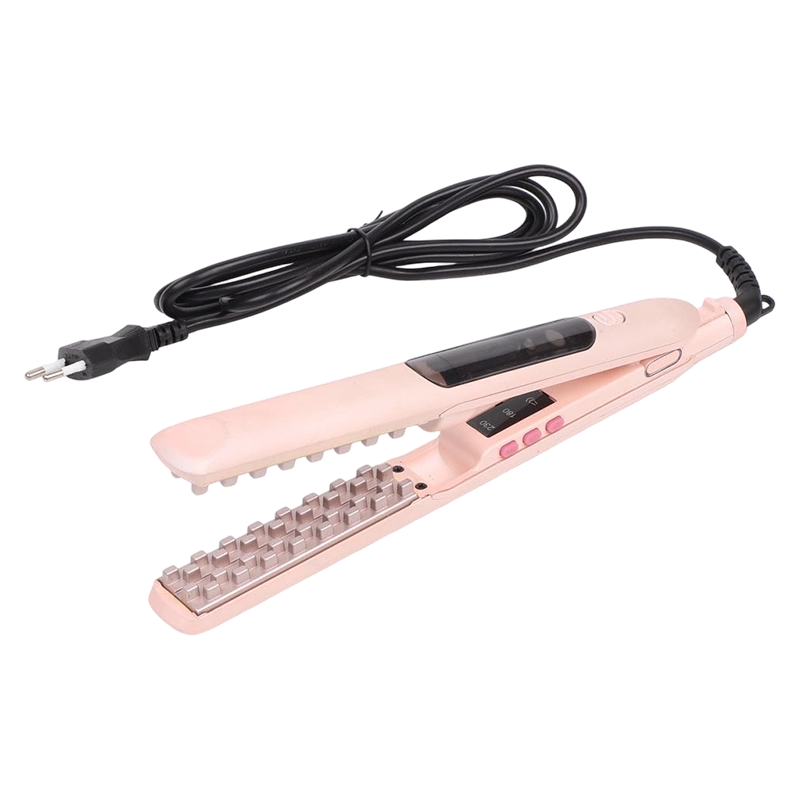
A Ceramic-plate Hair Straightener without steam venting can still deliver smooth results on completely dry hair — ceramic affects heat distribution and surface friction, not moisture tolerance.
How Plate Material and Design Influence the Damp-Hair Question
Ceramic Plates and Heat Consistency
Ceramic plates are popular for home use because they distribute heat evenly and glide smoothly over hair with less pulling friction. A well-made ceramic-plate iron typically holds its set temperature within a few degrees across the entire plate surface, which matters for damp hair specifically because uneven hot spots increase the risk of localized steam bursts. Even so, ceramic material alone does not make a straightener safe for wet hair; it simply makes the heat that is applied more predictable.
Floating Plates and Reduced Snagging
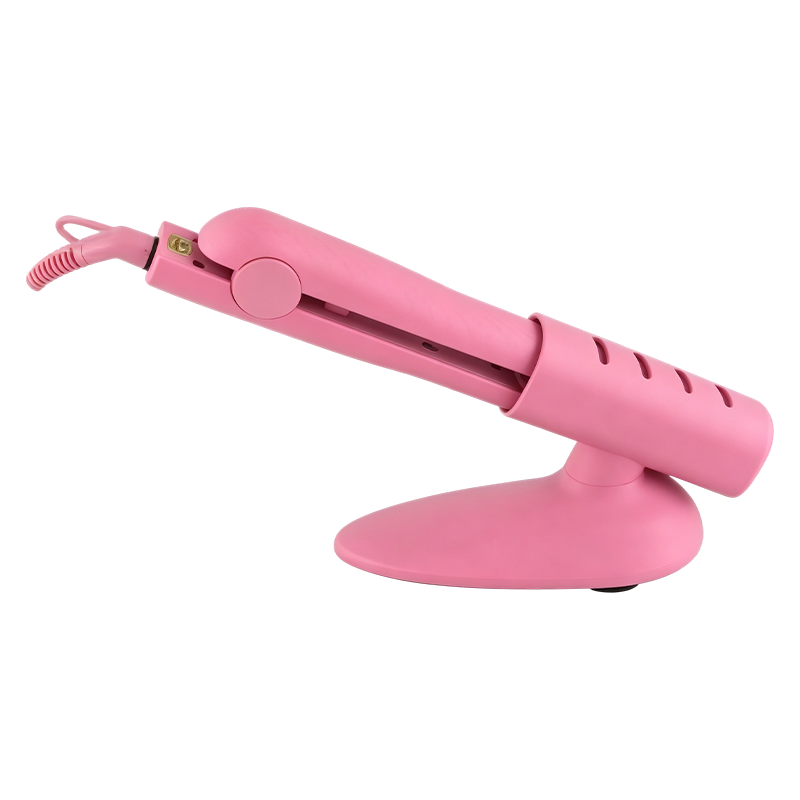
A Flat Iron With Floating Plate construction allows the plates to shift slightly and adjust to the natural thickness variation of a hair section as it passes through. This reduces tension and snagging, which is helpful for damp hair because wet strands are more elastic and prone to stretching or breaking under uneven pressure. When shopping for a straightener intended for slightly damp styling, a floating-plate design paired with steam vents is a stronger combination than either feature alone.
Comparing Dry-Hair-Only and Wet-to-Dry Straighteners
The table below summarizes the practical differences between a standard dry-hair straightener and one engineered for use on damp hair, so you can quickly match a product's specifications against your own routine.
| Feature | Dry-Hair-Only Straightener | Wet-to-Dry Straightener |
|---|---|---|
| Typical wattage | 25W–45W | 60W–90W |
| Steam vents | Absent | Present along plate edges |
| Recommended hair state | Fully dry | Towel-dried, 70–90% dry |
| Heat-up behavior | Fast, direct to target temperature | Gradual, moisture-adjusted ramp |
| Risk on damp hair | High — steam damage, breakage | Low — engineered for moisture release |
What Happens If You Use the Wrong Type on Damp Hair
Using a standard dry-hair iron on damp strands doesn't just risk poor styling results — it compounds physical damage in a measurable way. Because water needs significantly more energy to evaporate than dry keratin needs to reach styling temperature, the iron effectively has to work harder and longer to pass through damp hair, which often means passing the same section multiple times. Each additional pass adds cumulative heat exposure. Over weeks of repeated damp styling with the wrong tool, this shows up as:
- Rough, straw-like texture from repeated cuticle lifting
- Increased frizz as the damaged cuticle fails to lie flat
- Higher rates of split ends requiring more frequent trims
- Reduced color vibrancy on treated hair, since steam can push dye molecules toward the surface
Steam that escapes suddenly from between hot plates can reach the scalp, hands, or face, causing minor burns. This is why product manuals for dry-hair-only tools consistently instruct users to blow-dry hair to at least 90–100% dryness before styling.
A Practical Pre-Use Checklist for Home Use
Before styling hair that isn't fully dry, run through this short checklist. It takes under a minute and prevents the most common mistakes people make with home styling tools.
- Confirm the product page or manual explicitly says "wet-to-dry" or "damp hair safe"
- Towel-dry or air-dry hair until it is no longer dripping, ideally 80% dry or more
- Apply a heat-protectant spray formulated for wet application
- Set the temperature lower than your usual dry-styling setting, since moisture will still require added energy to clear
- Work in small sections and pass slowly to avoid needing repeated strokes over the same strands
If your straightener does not meet the "wet-to-dry" labeling requirement above, the safest approach is to skip damp styling altogether and blow-dry hair fully first, even if that adds a few extra minutes to your routine.
Choosing the Right Tool for Your Routine
For most home users who blow-dry before styling anyway, a well-made Ceramic-plate Hair Straightener with even heat distribution is perfectly sufficient and doesn't need wet-to-dry capability at all. For those who want to cut morning routine time by skipping the full blow-dry step, seeking out a straightener specifically labeled for damp use — ideally one that also offers a Flat Iron With Floating Plate design to reduce tension on hydrated strands — is the safer path rather than assuming any standard iron will do the job.
The small amount of extra research spent confirming wattage, vent design, and manufacturer wording pays off directly in healthier hair and fewer accidental burns at the sink or bathroom counter.
It's also worth thinking about how often you plan to style damp hair versus fully dry hair. Someone who blow-dries daily and only reaches for a straightener for final touch-ups may never need wet-to-dry capability at all, and can prioritize other features like plate width, cord flexibility, or ergonomic grip instead. On the other hand, someone who regularly styles right after a shower to save time will get far more practical value out of a dedicated wet-to-dry tool, even if it costs somewhat more upfront, simply because it removes the guesswork and reduces the cumulative heat exposure that comes from repeated passes over partially dried sections.
In Summary
Matching the tool to your actual routine, rather than buying based on price or plate material alone, is ultimately what determines whether your hair stays healthy over months of regular use. Look for the label, check the wattage, and let your hair dry a little more than you think it needs to — the rest is just good technique.