English
 Español
Hair Care & Styling Technology
Does a Steam Straightener Actually Straighten Hair Better Than a Traditional Flat Iron?
A close look at how water vapor changes the science of straightening — and where a dry iron still holds its ground.
The Direct Answer: Yes, in Most Practical Scenarios
A steam straightening iron generally outperforms a traditional flat iron when the goal is longer-lasting results with less visible damage to the hair shaft. The infusion of steam allows the plates to reshape the hair's hydrogen bonds at a lower, more consistent temperature than dry heat alone requires, which means the hair can be styled straight while retaining more of its natural moisture content. For most users with normal to thick hair, a professional steam hair straightener delivers a smoother finish, better shine, and a straightened style that resists humidity for a noticeably longer period than a standard dry flat iron.
That said, "better" is not universal. A traditional flat iron still has advantages in speed, portability, and simplicity, particularly for fine or already-straight hair that doesn't need the extra moisture boost. The rest of this article breaks down exactly where the steam advantage comes from, where it doesn't matter as much, and how to decide which tool fits your hair type and routine.
How Steam Changes the Straightening Process
Traditional flat irons rely entirely on dry heat, usually in the range of 350°F to 450°F (177°C to 232°C), to break and reform the hydrogen bonds in the hair shaft that determine its shape. This process works, but it also strips moisture from the cuticle rapidly, which is why repeated use of a dry iron is so closely associated with brittleness, split ends, and dullness over time.
A steam hair straightener introduces water vapor directly at the plate surface during the styling pass. The steam penetrates the cuticle layer faster than dry heat alone, which allows the internal bonds to reshape at a slightly lower average temperature — often 20°F to 30°F lower than what a dry iron would need to achieve the same level of straightness.
Heat damage accumulates non-linearly: even small reductions in sustained temperature exposure can meaningfully lower cumulative protein damage over months of regular use.
Why Lower Effective Heat Still Straightens Effectively
The steam acts as a heat conductor and moisture buffer simultaneously. Instead of the plate's dry heat evaporating the hair's internal water content on contact, the steam keeps a thin moisture layer active throughout the pass. This lets the heat transfer more evenly across the hair strand rather than concentrating stress at the outer cuticle, which is the layer most responsible for visible frizz and breakage.
Comparing Results: Steam Straightener vs. Traditional Flat Iron
The table below summarizes the practical differences users typically notice when switching from a dry flat iron to a steam straightening iron.
| Factor | Steam Straightener | Traditional Flat Iron |
|---|---|---|
| Average styling temperature | 320°F–380°F | 350°F–450°F |
| Typical style longevity | 2–3 days | 1–2 days |
| Frizz control in humidity | Better resistance | Faster reversion |
| Moisture retention | Higher | Lower |
| Learning curve | Moderate | Low |
| Best suited hair type | Thick, coarse, dry | Fine, already smooth |
These figures represent general patterns reported by users and stylists rather than fixed guarantees, since results vary based on hair density, porosity, and the specific device used.
Where a Steam Straightener Makes the Biggest Difference
Thick or Coarse Hair Textures
Thicker strands typically require multiple passes with a dry iron to achieve full straightness, which multiplies heat exposure. A steam hair straightener often straightens coarse hair in fewer passes because the steam helps the heat penetrate the strand more efficiently on the first pass, reducing the total time the hair spends under direct heat.
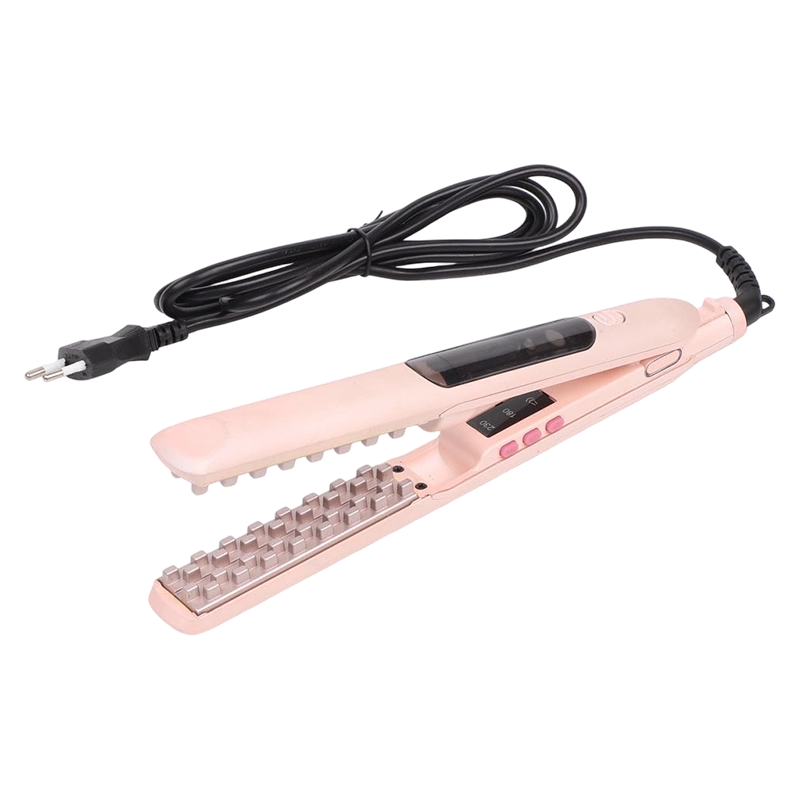
steam hair straightener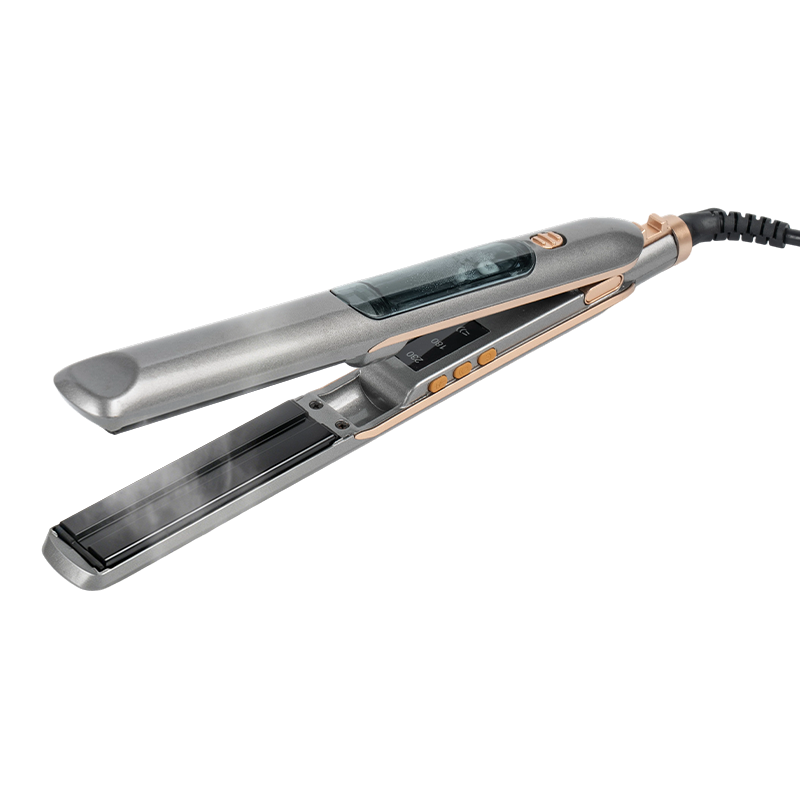
Chemically Treated or Color-Treated Hair
Hair that has already been colored, bleached, or chemically relaxed has a compromised cuticle layer and is more vulnerable to dry heat. The added moisture from steam styling helps offset some of that vulnerability, making a professional steam hair straightener a more forgiving option for hair that has already been through other processing.
Humid or Coastal Climates
Because steam styling seals the cuticle more smoothly than dry heat, hair straightened this way tends to resist ambient moisture in the air for longer. Users in humid environments frequently report that steam-styled hair holds its shape through a full workday, while dry-iron results begin to frizz within a few hours.
Frequent Styling Routines
Anyone who straightens their hair several times a week accumulates heat exposure quickly, regardless of which tool is used. Because a steam hair straightener generally requires fewer passes and lower peak temperatures to reach the same result, the cumulative thermal load over a month of frequent use tends to be measurably lower than with a dry iron used at the same frequency. This makes steam styling a particularly practical choice for anyone maintaining a straight style as part of a regular routine rather than an occasional one.
Success
Users who switch to steam styling for thick or color-treated hair most often report visibly reduced frizz and improved shine within the first few sessions.
Where a Traditional Flat Iron May Still Be the Better Choice
Steam is not universally superior. There are specific situations where a dry flat iron remains the more practical tool:
- Fine hair that straightens easily and doesn't need extra moisture, since steam can occasionally add unwanted weight or slight puffiness to very thin strands.
- Quick touch-ups where speed matters more than longevity, since dry irons typically require no water refills and heat up faster.
- Travel situations where a compact, lightweight tool without a water reservoir is more convenient.
- Budget-conscious buyers, since a basic dry flat iron is usually less expensive than a comparable steam straightening iron.
Info
Neither tool is objectively "better" in isolation — the right choice depends on hair thickness, climate, and how often you style.
Does Steam Straightening Actually Reduce Long-Term Damage?
The moisture-retention advantage of steam styling is real, but it does not eliminate heat damage entirely. Any tool applying direct heat above roughly 300°F to hair can weaken the protein structure over time with frequent use. What steam styling changes is the rate at which that damage accumulates, not whether it happens at all.
Warning
Steam reduces thermal stress — it does not remove it. Skipping heat protectant or using excessive temperature settings can still cause damage, even with a steam-enabled device.
In practical terms, users who switch from a dry iron used daily to a steam hair straightener used at a similar frequency often report noticeably less split-end formation and improved shine within four to six weeks. However, users who reduce styling frequency and use heat protectant regardless of tool type tend to see the best outcomes overall, since technique and frequency matter as much as the tool itself.
Best Practices to Maximize the Benefit
- Section hair into manageable pieces to avoid multiple repeated passes over the same strands.
- Use the lowest temperature setting that still achieves the desired straightness for your hair thickness.
- Allow the water reservoir to fully heat before the first pass so steam output is consistent.
- Apply a lightweight heat protectant even when using steam, since steam reduces but does not remove thermal stress.
Cost, Maintenance, and Practical Ownership Factors
A professional steam hair straightener typically costs more upfront than a basic dry flat iron, largely due to the added water reservoir, steam vents, and more advanced heating elements required to distribute steam evenly across the plate surface. Maintenance is also slightly more involved: the reservoir needs periodic descaling if hard water is used, and the steam vents should be cleaned regularly to prevent mineral buildup from affecting steam output.
On the other hand, many users find that the reduced need for daily restyling — since results last longer — offsets the extra maintenance time. A single steam styling session that holds for two to three days effectively replaces two to three sessions with a dry iron, which can mean less overall time spent styling per week.
Plate material also plays a role in how well a device performs over its lifespan. Ceramic and tourmaline-infused plates tend to distribute both heat and steam more evenly than basic metal plates, which reduces the chance of hot spots that can scorch individual strands. Buyers evaluating a steam straightening iron should look closely at plate composition, reservoir capacity, and the number of steam vents along the plate edge, since these details influence consistency more than headline temperature numbers alone.
Danger
Hard tap water left in the reservoir over time can cause mineral buildup that leads to uneven, sputtering steam — and in some cases, hot mineral spitting onto the scalp. Use distilled or filtered water whenever possible.
Final Verdict: Which Should You Choose?
For users with thick, coarse, color-treated, or humidity-prone hair, a steam straightening iron is very likely to outperform a traditional flat iron in both styling quality and hair health over time. The lower effective heat, improved moisture retention, and longer-lasting results make it the stronger overall choice for anyone who straightens their hair regularly.
For users with fine, easily-managed hair, or anyone prioritizing speed, portability, and lower upfront cost, a traditional flat iron remains a perfectly reasonable choice. Ultimately, the "better" tool depends less on brand or price and more on matching the tool's strengths to your specific hair type, climate, and styling frequency.
A practical approach for undecided buyers is to consider how often they style, how their hair reacts to humidity, and whether their current routine already involves heat protectant and moisture-focused hair care. Those factors, more than any single spec sheet, will usually point toward whether a steam-based tool or a conventional dry iron is the more sensible long-term investment.