English
 Español
Steam Hair Straightener Flat Iron: What the Steam Really Does, and What Buyers Must Verify
A working guide for brand owners, salon distributors and e-commerce sellers: how steam changes the straightening process, where budget builds break down, and how to review a sample before tooling is cut.
Here is the conclusion first. A steam flat iron earns its place in a range when the people using it have thick, coarse, curly or chemically treated hair, and it becomes a liability when it is bought as a marketing badge instead of a system. For coarse hair, steam is what turns a five-pass routine into a two-pass routine. For fine hair that flattens easily, it mostly adds cost.
The reason is mechanical rather than cosmetic. A dry plate straightens by conduction, and it fights friction the whole way down the section. Cuticle scales catch, the operator leans harder, and by the time the centre of a thick section reaches straightening temperature, the surface has taken more heat than it ever needed. Metered steam changes that interface.
The trade-off is complexity. A steam appliance adds a reservoir, a seal, a valve or atomiser, a vapour channel through the housing, and a set of tolerances a dry iron never had to hold. Nearly every quality complaint in this category traces back to that small fluid system, and nearly every margin difference comes from how carefully it was specified.
What the Steam Actually Does to the Hair
Straightening is conduction plus friction. The plate supplies heat, the hand supplies movement, and the cuticle supplies resistance. On a dry plate, coarse hair creates a great deal of that resistance, so the stylist increases pressure and repeats the pass. The result is a section whose surface has absorbed heat the core never required.
Steam works on friction first and heat second. A thin film of vapour between plate and hair lowers drag substantially, which lets heat travel into the section more evenly instead of sitting on the outside. Fewer passes, less mechanical stress, and a smoother result on exactly the hair types that normally resist a flat iron.
Three ways to generate steam, and what each one costs you
- Heated capillary vaporiser. Water drips from the tank onto a heated channel and flashes into vapour. It is the least expensive option and the easiest to seal, but output depends on plate temperature, so steam weakens at the moment a cool, damp section needs it most.
- Pump and nozzle. A small pump meters water to a heated nozzle. Output is controllable and repeatable, which is why most professional builds use it, but it adds a pump, tubing and a check valve, and every added joint is a potential leak path.
- Ultrasonic atomiser. A piezo disc breaks water into a fine mist without a heated channel. Droplet size is the finest and most even of the three, but the disc is sensitive to mineral content and adds electronics cost.
Once the rate is known, the next question is where the water goes when it cools. Vapour that condenses inside the housing has to be routed away from the electronics and away from the hair, and that routing is a design decision made long before the first sample arrives.
The Specifications That Predict Real Performance
Marketing copy rarely separates a good steam iron from a mediocre one. The ladder below does, because every line on it is something a customer feels within the first month of use.
| Parameter | Entry expectation | Professional expectation | Why it matters |
|---|---|---|---|
| Plate material and coating | Aluminium with a single sprayed ceramic layer | Die-cast aluminium with ceramic glaze, or titanium inserts | Coatings wear fastest at 200 °C and bare metal creates hot spots |
| Panel geometry | Fixed flat panels | Floating or pivoting panels with spring tension | Even clamping pressure on curved sections and thick regrowth |
| Temperature accuracy | Within roughly ±15 °C at the plate | Within ±5 °C with closed-loop control and a display | Lightened hair shows any swing above ±10 °C as patchiness |
| Steam delivery | Single nozzle, no rate control | Metered valve, 1 to 3 ml per minute, 4 to 12 ml tank | Excess steam wets the section and cools the plate |
| Temperature recovery | 25 to 40 seconds after a wet pass | Under 10 seconds under the same load | Recovery time, not peak temperature, sets the pass count |
| Heat-up to 180 °C | 45 to 60 seconds | 20 to 30 seconds | Chair time in salons and repeat use at home |
| Electrical build | Single voltage, basic thermostat | 110 to 240 V options, thermal fuse, double insulation | Regional compliance failures drive most returns |
| Certification pack | Self-declared conformity | Third-party tested to the destination market standard | Customs holds and marketplace delistings are expensive |
Two rows deserve extra attention. Temperature recovery decides the pass count more than maximum temperature does, because a steam iron cools its own plate with every wet pass. A build with a fast control loop and sufficient thermal mass returns to set point in seconds; a cheaper build keeps dropping, and the customer compensates by pressing harder. Temperature accuracy is the second: on colour-treated hair, a plate that swings by 15 °C produces streaks that no technique can hide.
For salon-facing ranges, closed-loop temperature control paired with floating panels is the combination that keeps pressure even across curved sections. For retail ranges aimed at bangs and edges, plate width matters more than any electronic feature: a full-width plate is simply the wrong tool for a 3 centimetre section of hairline.
Matching the Tool to Hair Type and Routine
The same steam iron cannot serve every buyer well, so range planning should start from the customer's hair rather than from a price point.
- Fine or already smooth hair: 150 to 170 °C, narrow plates, and minimal or switched-off steam. Too much moisture leaves fine hair limp and slow to dry.
- Medium wavy hair: 170 to 190 °C with floating panels, and steam at the lowest setting to smooth the cuticle without soaking the section.
- Coarse type 3C to 4C and high-density hair: 190 to 210 °C with a genuine steam supply. Pass count is the number that matters, and a full head can consume 8 millilitres or more of water.
- Chemically relaxed or colour-treated hair: 150 to 170 °C, using steam instead of repeated dry passes to limit colour fade.
- Bangs, edges and short regrowth: a 15 millimetre narrow plate. Full-width plates overheat the hairline and are difficult to control near the face.
- Travel and daily-carry kits: compact dual-voltage builds, accepting that a pocket reservoir needs refilling mid-routine.
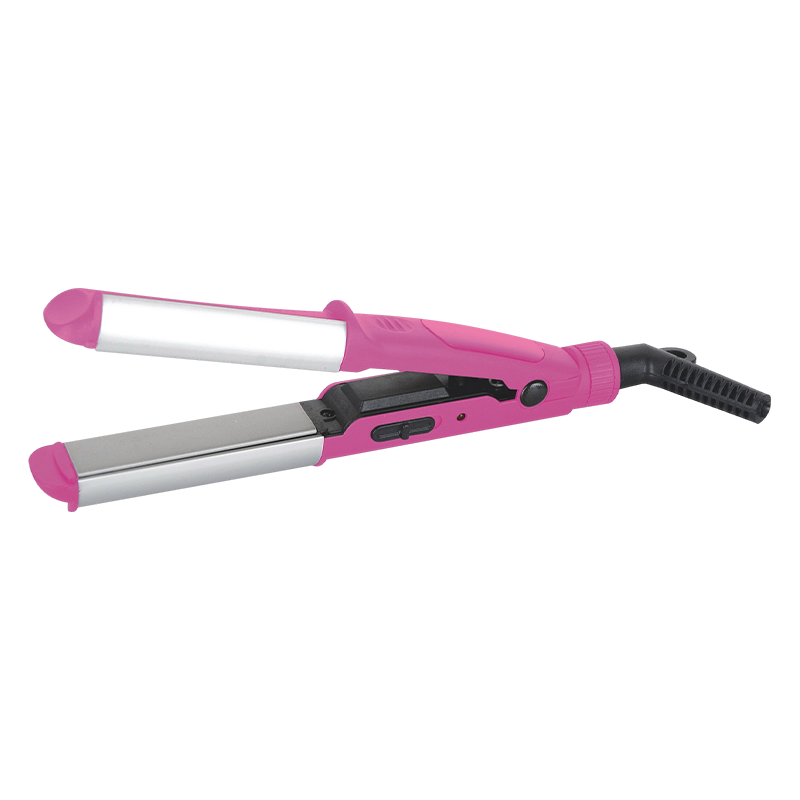
Mini formats deserve their own line in a range rather than being treated as a cheap variant of a full-size iron. They sell to a different moment, they carry different tolerances, and they are usually the first product a first-time buyer tries.
Steam does not replace heat. It replaces friction. Every pass removed from a routine is heat the hair never absorbed in the first place.
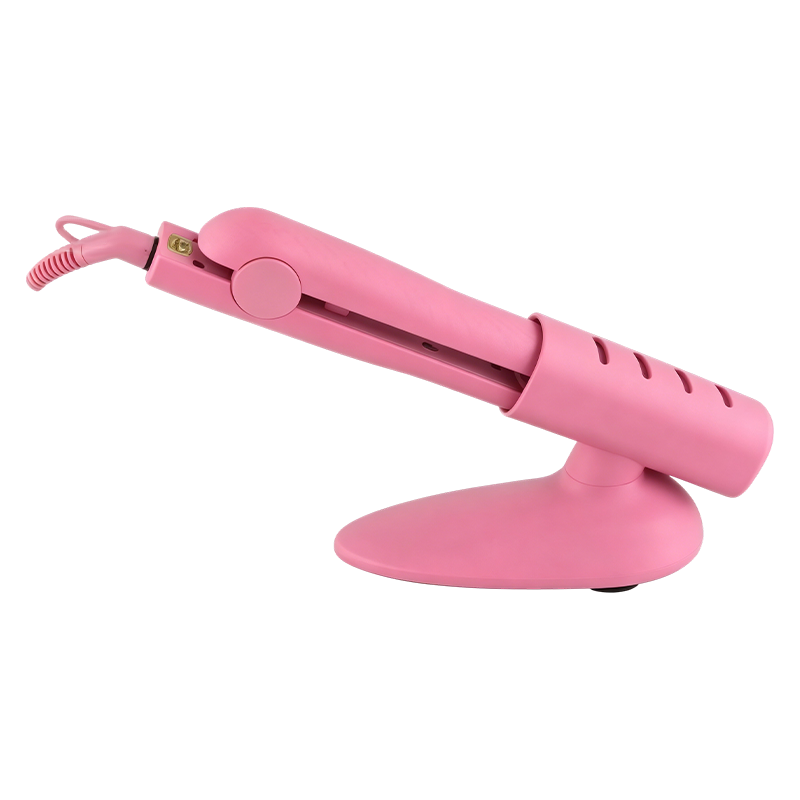
Accessories are an inexpensive way to differentiate a bundle. A heat-resistant stand keeps a 200 °C plate off a vanity surface during cool-down and costs far less than a printed sleeve. A high-temperature nylon straightener stand is a typical add-on for salon channels and gift sets, and it reduces the burn complaints that follow careless cool-down.
Where Steam Flat Irons Fail Between Sample and Mass Production
The failure modes repeat predictably across factories, and most of them are decided at the drawing stage rather than on the line.
- Reservoir gasket. Silicone hardness and compression set matter more than the material name. A soft gasket that seals perfectly at unit one can weep into the housing after a few hundred refill cycles.
- Nozzle clogging. Scale and styling product residue narrow the channel. Output falls gradually, so the symptom appears as poor results rather than as an obvious defect.
- Condensation path. Vapour that cools inside the housing becomes water on the electronics. The droplet a customer sees on their hair usually started as a routing decision made upstream.
- Thermal fuse placement. Fuses specified for a dry iron can drift or trip early on a steam build, because the surrounding housing runs hotter and the airflow is different.
- Plate edge sealing. Water and coating meet at the plate edge, and that is where coatings peel first when bonding is rushed.
- Control loop tuning. A steam iron loses plate temperature with every wet pass, so the loop, not the wattage, sets how many passes a customer needs.
Regulatory paperwork is not the place to save money. A contact-probe overheating test, a cord anchorage pull, a leak-current check and an immersion check cost a modest amount per model once, and they are precisely what a marketplace audit requests first. If your team is unsure which checks apply to a heated styling appliance, this overview of how to tell whether a hair straightener is safe is a reasonable starting brief.
Cost Drivers, MOQ and Tooling: Where the Price Really Comes From
Quoted prices for steam models vary far more than dry models, and the gap is rarely explained by labour rates. It comes from the bill of materials and the tooling behind it.
- The steam assembly, meaning tank, valve or pump, nozzle and seals, is typically the second-largest cost line after the heating element and control board.
- Plate construction ranges from sprayed aluminium through ceramic glaze to titanium inserts, and each step changes performance as much as cost.
- Control electronics divide sharply between a mechanical thermostat and a controller with a sensor and a digital display.
- Surface finishing, whether multi-colour moulding, water-transfer printing or spray paint, adds either tooling or per-unit hand time.
- Compliance testing is a fixed cost per model per destination market, and it repeats with every electrical change.
- Packaging and accessories, including stands and travel pouches, raise unit cost slightly while reducing damage and return rates.
Tooling is what makes the first order difficult. Housing molds are the largest upfront commitment, which is why experienced buyers ask whether a steam variant can share an existing platform. When a new steam head can reuse the housing, handle and switchgear of a proven dry iron, the tooling bill drops substantially and the development timeline shortens. When it cannot, that constraint belongs in the project plan rather than in a late revision.
Pre-Production Checklist for a Steam Flat Iron Sample
Sample approval is the last cheap moment in a project. Everything after it costs tooling money, so the review should be systematic rather than visual.
- Lock the destination market and its voltage, plug and certification requirements before the sample is assembled.
- Confirm the steam rate in millilitres per minute, the tank volume and the refill procedure in writing.
- Verify plate temperature with a contact thermometer at three points on the plate, at the lowest, middle and highest settings.
- Run thirty consecutive wet passes at maximum temperature, then record temperature drop and recovery time.
- Judge droplet size. An invisible mist is correct; visible wet spots mean the nozzle or the rate is wrong.
- Fill and empty the reservoir repeatedly, then leave the unit on its side for an hour to check the seals.
- Confirm thermal cutoff, double insulation and earth continuity against the destination standard.
- Inspect the coating at the plate edge after heat and water exposure, since that is where peeling begins.
- Review the manual's water instructions and the accessory list, including any stand or travel pouch.
- Freeze and retain the approved golden sample, so later shipments have a measurable reference.
None of this is exotic engineering. It is ordinary discipline applied to a small fluid system that most of the market treats as an accessory. Buyers who specify steam rate, hold temperature tolerance, and test with water rather than with optimism get a product that performs the way the category promises: fewer passes, less friction, and hair that still looks like hair afterwards.
The category rewards that discipline with pricing power. A steam flat iron that genuinely recovers temperature quickly and does not weep after six months can sit at a higher price point than a visually identical unit that simply produces vapour, because the difference shows up in the customer's routine long before it shows up in a warranty claim.